
On this page
Brilliantor Editorial · October 16, 2026
Corporate Gifting Checklist: Plan Useful Branded Gifts
Use this corporate gifting checklist to plan useful branded gifts, manage recipient details, approve samples, and coordinate budgets and delivery.
Corporate gifting becomes difficult when the gift is chosen before the recipient and delivery plan are understood. A beautifully branded item can still create work for someone if it arrives at an old address, requires an unexpected payment, or does not fit their needs.
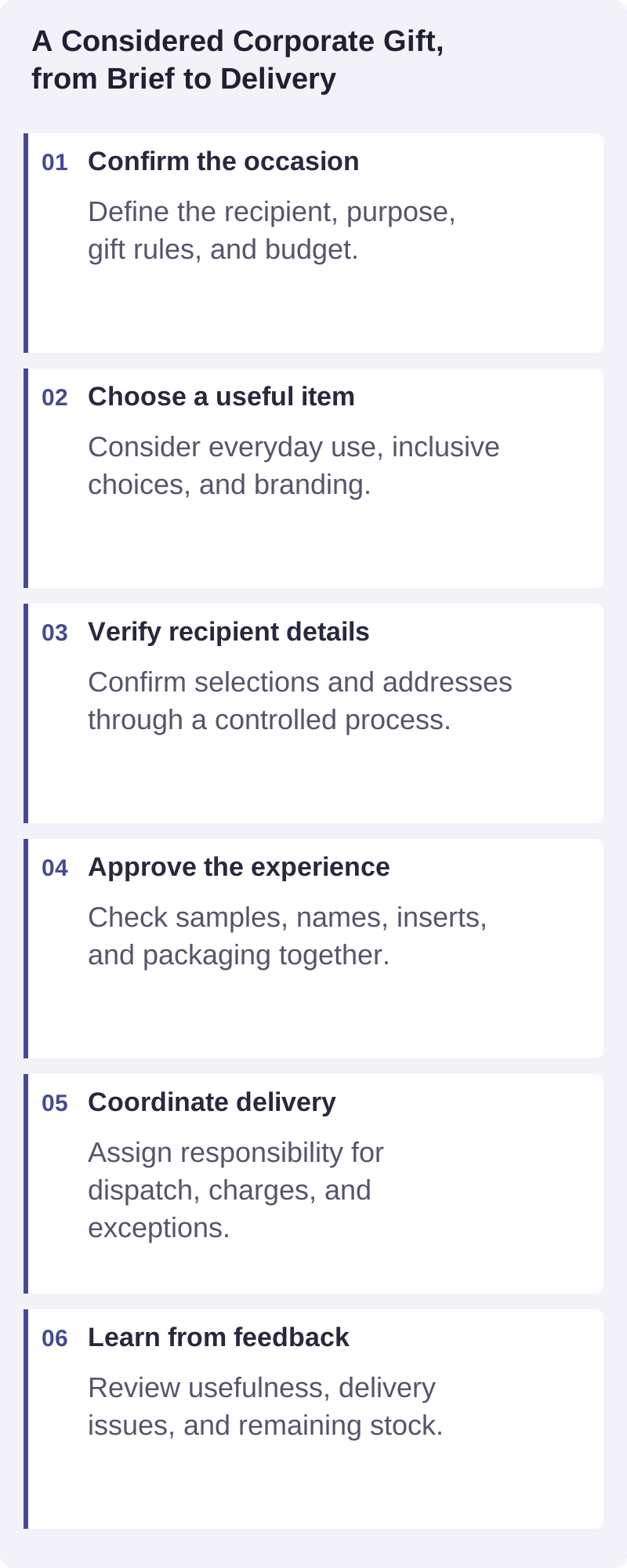
Start with the experience you want the recipient to have. Then design the buying process around it. This corporate gifting checklist covers the decisions that help a branded gift feel considered, from the first brief to the final delivery exception.
Clarify the occasion and the relationship
Write down why you are sending the gift. Welcoming an employee, thanking a long-standing client, recognizing a project team, and marking an event are different occasions. The message, branding, and budget should reflect that difference.
Name the internal owner and the person who can approve the spending. For a client program, ask the relationship owner whether the recipient’s organization accepts gifts and whether a value limit or approval process applies. Do not assume that a familiar contact can accept anything you send.
Avoid using a gift to imply a commitment that has not been agreed. Appreciation should remain appreciation. Where public officials, procurement decisions, regulated industries, or sensitive business negotiations are involved, obtain appropriate compliance guidance before placing an order.
Choose usefulness before novelty
Think about where the gift will be used. A desk item might suit office-based recipients, but remote teams may have varied workspaces. Apparel introduces size and fit decisions. Food introduces preferences, ingredients, storage, and destination restrictions. Fragile objects introduce packing and handling concerns.
Shortlist products against practical questions:
- Would the recipient use this without the branding?
- Is it appropriate for the occasion and relationship?
- Is it comfortable to carry, store, clean, or wear?
- Does it create sizing, maintenance, or delivery burdens?
- Can recipients decline it or choose an alternative?
A restrained logo and a relevant note can be more appropriate than making every available surface promotional. Consider how the item looks when used outside your workplace.
Offer choice where it solves a real problem
Choice is useful when preferences vary substantially. You could offer a size selection, a non-apparel alternative, or an option to decline. Keep the choice manageable and set a response deadline before production quantities must be locked.
Do not collect medical explanations or other sensitive details just to administer a gift choice. Ask for the practical selection needed to fulfill the request. For example, an alternative-item choice may avoid the need to collect a detailed personal reason.
Budget for the recipient’s complete experience
Create a project budget that includes products, decoration, personalization, sample review, packaging, inserts, assembly, shipping, applicable duties or taxes, and exception handling. Direct-to-home delivery has different operational needs from sending cartons to one office.
Check what happens if a name changes, an address is corrected after dispatch, or a parcel must be resent. These are not reasons to abandon the program. They are reasons to agree on responsibilities before the order is placed.
For international recipients, establish who is expected to pay import-related charges. Do not describe the gift as a seamless experience if the recipient may need to provide information, arrange collection, or pay charges. Confirm the shipment arrangement rather than assuming the word “gift” removes customs obligations.
Collect recipient details carefully
Use a controlled recipient list with a unique reference for each person. Separate the shipping address, chosen item, size if relevant, approved personalization, and delivery status. Avoid relying on loosely formatted email replies that can be copied into the wrong row.
Confirm addresses near the dispatch date, particularly for remote employees or people who travel. Explain what the information will be used for, who needs access to fulfill the gift, and how corrections can be made. Use an approved secure channel when sharing fulfillment data.
The UK’s Information Commissioner’s Office describes data minimisation as collecting and keeping personal data that is adequate, relevant, and limited to the purpose. Its data minimisation guidance offers a useful reference for UK GDPR obligations. Applicable privacy requirements depend on your organization and recipients; an address spreadsheet is not exempt simply because it supports gifting.
Approve the item, the name, and the package
A gift sample should answer more than “Is the logo correct?” Check the object’s everyday usability, the decoration, the packaging fit, and the order in which the recipient encounters the contents.
For personalized items, approve the data format as well as the visual layout. Preserve accents, capitalization, and preferred names. Ask how long names are handled and inspect an example that challenges the available space. Do not assume every name can be squeezed into the same design without becoming hard to read.
Read the printed note aloud. It should sound appropriate to the relationship, clearly identify the sender, and avoid generic claims about the recipient. Check that packaging protects the item without making opening unnecessarily difficult.
Plan delivery as a separate workstream
Work backward from the date the recipient should have the gift. Include time for recipient responses, artwork approval, sample revisions, production, packing, dispatch, transit, customs where applicable, and receiving. Confirm which estimates are conditional and what could change them.
For a single office delivery, verify opening hours, reception arrangements, and carton handling. For individual deliveries, decide who receives tracking, who responds to failed delivery notices, and how returned packages are handled.
If an event date is fixed, identify the latest point when you can simplify the product or packaging. Avoid approving an unreviewed substitution just to keep the original plan looking intact.
Final corporate gifting checklist
- Purpose, recipients, gift acceptance rules, and budget are confirmed.
- Product choices are appropriate and alternatives are available where useful.
- Personalization is approved from a clean, current recipient list.
- Recipient information is limited and shared securely.
- Samples, inserts, and protective packaging are approved.
- Production time is separated from transit and customs estimates.
- Import charges and delivery responsibilities are understood.
- One owner handles address changes, returns, and damaged items.
Frequently asked questions
How early should corporate gifts be ordered?
There is no reliable universal lead time. Request a schedule for the actual products, customization, quantity, packaging, and destinations. Include approval and revision time rather than counting only production days.
Should a corporate gift have a large logo?
Match the branding to the recipient and occasion. A subtle mark may suit an appreciation gift, while event merchandise may need stronger visibility. Judge the physical sample, not just the enlarged mockup.
How should we judge whether the program worked?
Review delivery exceptions, useful recipient feedback, unused stock, and the effort required to run the program. Avoid treating a polite thank-you as proof of business impact. Use what you learn to improve the next brief.
Planning a branded gifting project? Contact Brilliantor with the occasion, recipient count, destinations, budget range, and desired delivery date.