How to Choose T-Shirt Fabric: Cotton, Polyester or Blends
Compare cotton, polyester and blended T-shirt fabrics for comfort, printing and everyday wear. Use a practical sample checklist before ordering custom apparel.
Original editorial diagram for this guide; not product inventory or a company photograph.
Choosing T-shirt fabric is easier when you start with the person wearing it, not a label that says “premium.” A concert souvenir, an outdoor event shirt and a staff uniform solve different problems. The right fabric should suit that job, support the decoration and feel good after washing.
Cotton is a useful starting point for familiar everyday comfort. Polyester deserves consideration when moisture handling and repeat wear matter. Blends offer another way to balance feel and performance. None is automatically best: the finished garment, including its knit, weight, fit and finish, needs to be evaluated.
Start with the wearing conditions
Write one sentence describing how the shirt will be used. For example: “Volunteers will wear this outdoors, move equipment and wash it at home.” That statement gives you a better buying brief than “soft, good-quality shirt.”
Then rank your priorities:
Comfort during the intended activity.
A particular fit or drape.
The appearance and feel of the finished graphic.
Practical care requirements.
Budget, size coverage and repeat-order needs.
If several priorities conflict, choose the one that would make the shirt unsuitable if missed. A beautiful print cannot rescue a uniform that restricts movement. A comfortable blank cannot rescue artwork that is unreadable on its textured surface.
Cotton: a familiar option with real tradeoffs
Cotton is absorbent. That can be comfortable in ordinary wear, but a saturated cotton shirt may stay damp while the absorbed water evaporates. Fabric engineering and finishes can change moisture behavior, so “cotton” should not be treated as a complete performance specification. The textile association’s overview of cotton moisture management explains this distinction.
For a casual merchandise collection, begin by comparing cotton samples with similar fits. Feel the inside as well as the outside. Try the collar, look through lighter colors in daylight and check whether the body hangs as intended.
What to check before choosing cotton
Ask how the finished garment behaves after laundering. “Pre-shrunk” is not a promise of zero dimensional change. Shrinkage involves yarn, fabric construction, processing and care, rather than fiber content alone. This is explained in the technical guide to shrinkage and skewing.
For printed designs, inspect a decorated sample rather than assuming every cotton shirt will produce the same result. Surface smoothness, garment color and the selected printing process all deserve review. A sample also reveals whether the graphic feels comfortable across the chest.
Polyester: evaluate the performance, not the slogan
Polyester fabrics are frequently considered for activewear and workwear. The useful question is whether a particular shirt manages moisture and movement in the conditions you care about. A “performance” description alone does not answer that.
Moisture absorption, movement through a fabric and drying are different properties. A fabric can absorb little water into its fibers yet still need suitable yarn geometry, construction or finishing to move moisture effectively. Research on cotton–polyester knit moisture management illustrates why fiber percentage is only one part of the picture.
For an outdoor team shirt, ask wearers to move in the sample. Check how it feels under a backpack, whether it clings, and whether the neckline remains comfortable. If measurable performance is important, ask what product-specific evidence supports it. Relevant textile test methods distinguish liquid moisture management, wicking and drying instead of combining them into a single vague claim.
Check decoration compatibility before committing to polyester. A fabric that performs well undecorated may need a different print system or a smaller graphic. Heat-sensitive garments, coatings and dyes can require additional production assessment.
Blends: read the actual composition
A blend is a recipe, not a quality grade. A cotton–polyester shirt and a tri-blend may feel very different, even when both are marketed as soft. Read the actual fiber percentages, including any additional fibers, and check whether composition changes between solid and heather colors.
Blends can be useful when you want a particular balance of drape, comfort and maintenance. They also introduce more variables. Do not assume that adding polyester eliminates shrinkage, or that every tri-blend is suitable for the same printing method.
A practical way to shortlist blends is to compare them directly with your preferred cotton and polyester samples. Keep the intended fit and garment color as similar as possible. Otherwise, you may prefer a different cut while mistakenly crediting the fiber blend.
Look beyond fiber: weight, construction and fit
Fabric weight is often expressed in grams per square meter, or GSM. It describes mass per area, not an overall quality score. A lighter shirt may suit layering; a heavier one may suit a more structured silhouette. Neither choice is automatically more durable or comfortable.
Inspect four details together:
Surface: Is it smooth, textured, brushed or visibly open?
Drape: Does it fall close to the body or hold a firmer shape?
Construction: Are the collar and seams comfortable during movement?
Fit: Do the actual garment measurements match the intended wearer?
Do not compare sizes by letter alone. Use the size chart, measure a shirt you already like and check the measurement method. Review the smallest and largest sizes needed, not just the sample that happens to be available.
Match the fabric to the finished design
Treat fabric and decoration as one decision. A large solid graphic changes the wearing experience more than a small chest mark. Embroidery adds thread and backing. A pale garment and a dark garment may require different print preparation.
Ask to evaluate the proposed artwork at its actual size on the proposed fabric. If a sample is not available, identify the unresolved questions before approving the order. A digital mockup can communicate placement, but it cannot prove softness, opacity or wash performance.
For repeat programs, record the approved garment style, color, composition, measurements and decoration details. Keep a reference sample where practical. This makes future comparisons more useful than relying on a photograph alone.
Fabric selection checklist
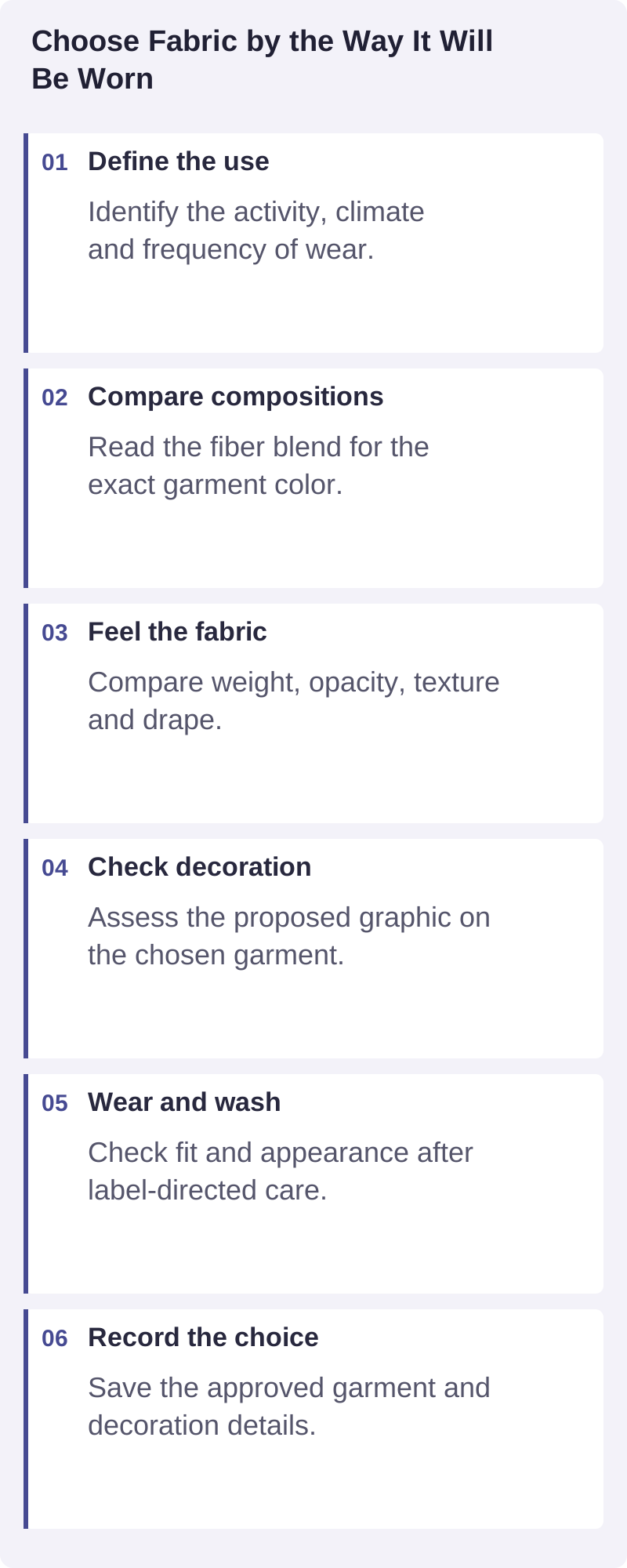
Define the activity, climate and expected frequency of wear.
Read the composition for each selected color.
Compare fabric weight, opacity, feel and fit together.
Confirm that the decoration method suits the exact garment.
Check the care label against the wearer’s routine.
Measure a sample before and after washing as instructed.
Review the decorated result, including its inside surface.
Save the approved specifications for future orders.
A practical visual summary of the decisions discussed in this guide.
Frequently asked questions
Is 100% cotton always the best T-shirt fabric?
No. It can be an excellent starting point for casual merchandise, but the intended activity, fabric construction and decoration matter. Compare actual samples instead of treating a fiber percentage as a quality guarantee.
Does a higher GSM mean a better shirt?
No. GSM tells you fabric weight per area. Choose the weight that supports your desired feel, coverage and silhouette, then assess construction and fit separately.
Which fabric should I choose for a mixed group?
Start with the shared use case and a clear size range. Shortlist a small number of garments and invite representative wearers to assess them. A practical, comfortable option across the group is usually more useful than one person’s favorite fabric.
Build a clearer apparel brief
Bring your use case, quantity, preferred fit, artwork and any care requirements to Brilliantor’s contact team. Those details make it easier to discuss suitable custom apparel options without relying on generic fabric claims.