Custom Apparel Care: Protect Prints, Fabric and Embroidery
Learn how to care for printed and embroidered apparel without guessing temperatures. Check labels, protect decoration and build a practical laundry routine.
Original editorial diagram for this guide; not product inventory or a company photograph.
The safest custom apparel care routine starts with the instructions for the finished item. A cotton T-shirt, a polyester performance top and an embroidered sweatshirt may need different treatment. Decoration adds another variable, so a rule that suits an undecorated garment may not suit the customized version.
Use the product label together with any decoration-specific care guidance supplied with the order. If they appear to conflict, do not guess. Ask the seller to confirm a compatible routine for the complete garment before applying heat, bleach or a cleaning treatment.
Read the label before the first wash
Care instructions address more than water temperature. Review washing, bleaching, drying, ironing and professional cleaning. In the United States, the care-labeling guidance explains that covered apparel must carry instructions and relevant warnings for regular care.
Do not replace a specific instruction with a generic “all custom shirts” recipe. A cold wash is not a substitute for a “do not wash” label. Air drying is not automatically equivalent to the specified drying method. Even familiar garments can have trims, coatings or decoration that change the care requirements.
If you manage uniforms or merchandise for others, retain the instructions supplied with the exact order. Similar-looking garments from different orders may not be identical. Keep product references with the care guidance so it is easy to answer questions later.
Understand the main care-symbol messages
The official textile care-symbol guide explains how symbols communicate allowed treatment. In that system, a number inside the wash tub indicates a maximum temperature in degrees Celsius, while bars below the tub call for reduced mechanical action. A crossed-out treatment should not be used.
Check drying and ironing symbols separately rather than assuming washing permission covers them. The ironing setting should come from the label, not a guess based on fiber content. Symbols and temperatures can be confusing, so consult the applicable guide instead of relying on an old chart remembered from another garment.
For a care card, plain-language instructions can be clearer than unexplained icons. Use only instructions verified for that product. Do not create a generic label by copying symbols from an unrelated shirt.
Prepare the load to protect the decoration
Before washing, check pockets and separate items with incompatible care requirements. Secure fasteners according to the garment instructions and keep exposed hook-and-loop closures or rough hardware away from decorated surfaces.
Where compatible with the product’s guidance, turning a printed shirt inside out is a useful way to reduce direct rubbing on its decorated face. This approach also appears in official printed-shirt washing guidance, which emphasizes following the garment manufacturer’s instructions.
Choose the detergent and dose for the care label, washing machine and load. More detergent is not automatically more effective. Avoid introducing bleach, stain removers or other treatments just because they are available in the laundry room.
For a new garment with uncertain colorfastness, follow any separate-wash warning. Do not use the first wear of an important uniform as the first opportunity to discover its care requirements.
Adjust your attention to the decoration
DTG and other directly printed designs
Check the printed area before and after care, especially where the garment regularly folds. Use the supplied washing and drying instructions rather than treating every ink system alike. Do not assume a printed garment can tolerate the same ironing contact as an undecorated one.
If you notice unexpected changes, record what happened before trying another treatment. Photograph the affected area and note the wash program, detergent and drying method. That information is more useful to the seller than a guess about which stage caused the problem.
DTF and other heat-applied decoration
Do not try to repair lifting edges with a household iron without product-specific guidance. Application temperature, pressure and time belong to a defined process; extra heat can create another problem instead of fixing the first one.
Avoid picking at an edge or stretching the graphic to “test” it. If a change appears after care, stop the experiment and ask for advice. Keep the order reference and photographs available.
Embroidered logos and lettering
Pay attention to snagging and the reverse side of the embroidery. Do not pull loose-looking stitches or cut away backing simply because it is visible. Stabilizers help support embroidery, and their purpose is described in this official embroidery-support guidance.
If thread has snagged or a backing edge is uncomfortable, ask how the particular item should be handled. A stitched logo is not permission to bleach, iron or tumble dry the garment without checking its instructions.
Fabric still matters after decoration
Care for the complete product, not only the graphic. A cotton-rich knit can change dimensions during laundering, while a performance garment may have instructions tied to its construction or finish. Blends should be treated according to their finished-product label rather than the most familiar fiber in the composition.
Shrinkage is influenced by construction and manufacturing as well as care. The technical explanation of garment dimensional change is a useful reminder that a fabric percentage cannot predict the outcome on its own.
For a recurring apparel program, assess a representative sample using the intended care routine before issuing a large order. Measure it consistently before and after care, and review fit, seams, collar shape and decoration together. Treat that as a practical product check, not as a substitute for formal laboratory testing.
Dry, iron and store with the same care
Read the drying instructions before moving a garment from the washer. Use the permitted method and heat setting, and avoid unnecessary extra drying. If natural drying is specified, follow any directions about hanging, laying flat or shade.
Iron only when the label permits it, using the specified setting and any decoration-specific restrictions. Do not press directly onto a graphic unless the product guidance expressly allows it. A pressing cloth or inside-out position does not make a prohibited temperature safe.
Store garments only when fully dry. Fold them without crushing structured decoration, and keep them away from surfaces that may snag the fabric. For team kits, return clean items to clearly identified storage so used and ready-to-wear garments do not get mixed together.
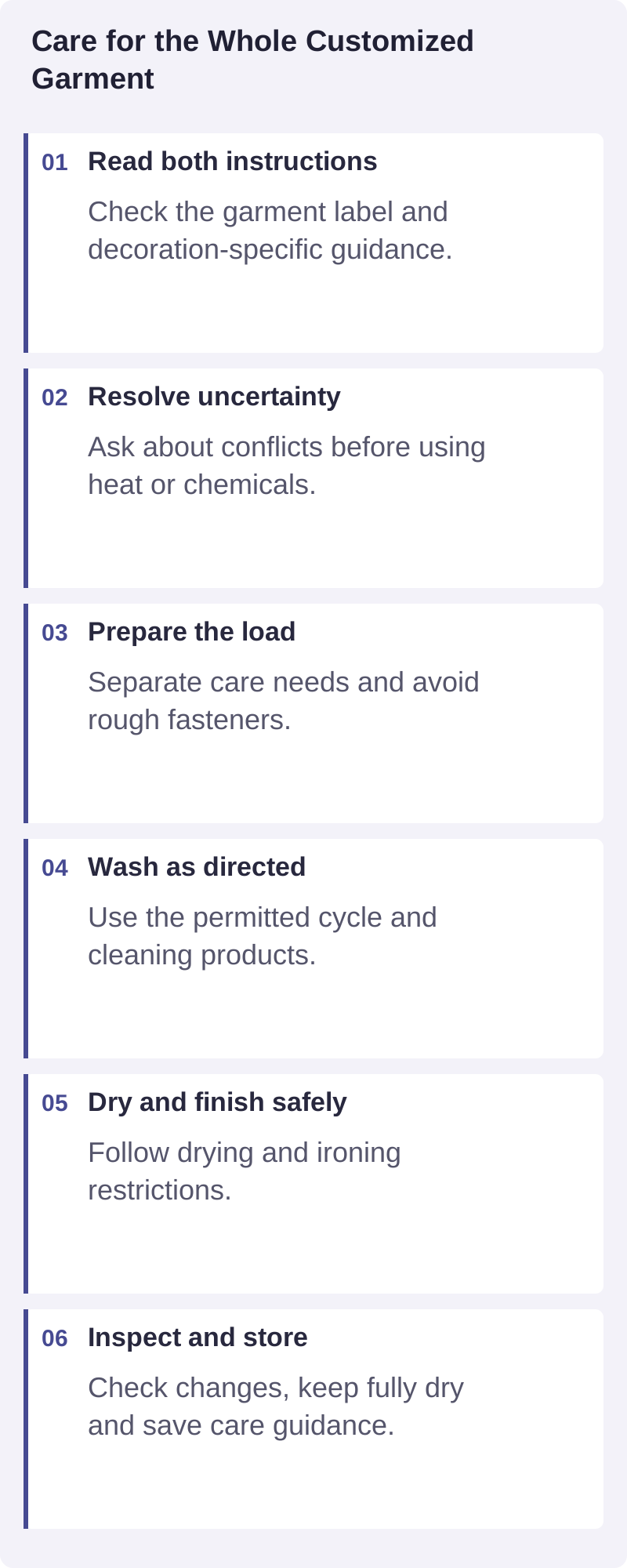
A practical custom apparel care checklist
Read the finished garment label and supplied decoration guidance.
Resolve unclear or conflicting instructions before washing.
Separate incompatible loads and protect against rough fasteners.
Use only permitted detergent, treatment and wash settings.
Follow the stated drying and ironing restrictions.
Inspect unexpected changes without attempting an improvised repair.
Store fully dry and retain the product’s care information.
A practical visual summary of the decisions discussed in this guide.
Frequently asked questions
Should all custom T-shirts be washed in cold water?
Not automatically. Cold washing may be recommended for many printed shirts, but the finished-product instructions come first. It is not a universal substitute for a specific care method or a prohibition on washing.
Can embroidered clothing go in a tumble dryer?
Only if the care instructions for the finished item permit it. Thread, backing, fabric and other trims all matter. An embroidered logo alone does not establish a safe dryer setting.
How many washes should a custom print last?
There is no reliable universal number. The garment, decoration system, production quality, wear and care routine affect the outcome. Look for product-specific guidance or relevant testing instead of an unsupported lifespan promise.
Ask for care guidance with the order
If you are planning custom apparel, include expected washing conditions when you contact Brilliantor. A home-laundered event shirt and a frequently cleaned staff garment may need different choices, and those requirements are best discussed before decoration is approved.