
Brilliantor Editorial · October 17, 2026 · 3 min read
Phone Case Compatibility: Check the Exact Model Before Artwork
Confirm the device model, camera opening, finish and accessory requirements before ordering a custom phone case. Avoid assuming similar phones share a case.
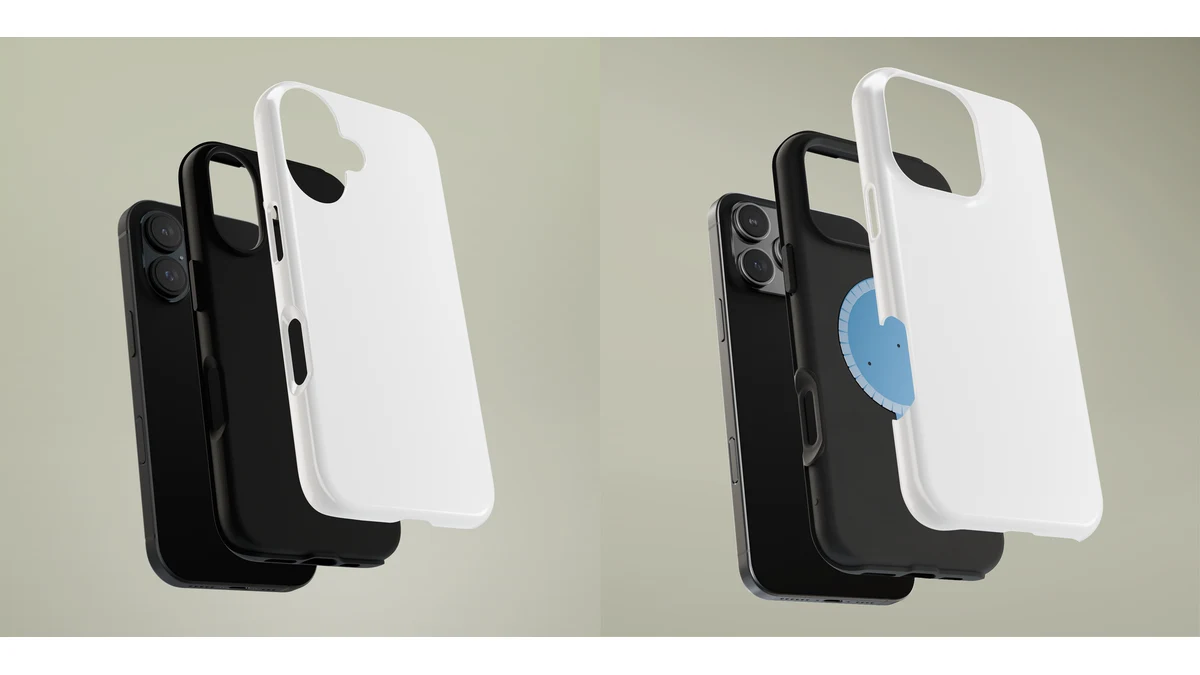
“A case for my phone” is not enough information for a custom-product brief. Similar device names and familiar silhouettes can conceal differences in camera openings, buttons and dimensions. Resolve the device first, then review the artwork and finish for that exact case option.
The catalog’s case enquiry asks for an exact device model rather than presenting an unverified list of supported phones. That is intentional: a product family’s existence does not establish a compatible option for every device.
Identify the device from an authoritative record
For an iPhone, use Apple’s model-identification reference to distinguish the exact model. Use the equivalent manufacturer record for another device. Avoid sending an IMEI, serial number or account information when a model name or model identifier is sufficient.
Write the complete model designation in the brief, including qualifiers such as Plus, Pro or Max where applicable. Do not shorten it to a series name and assume the intended version is obvious. If the project covers a group of people, collect the distinct model names rather than unnecessary personal device data.
Ask whether the quoted case matches that model
The Tough Cases page describes a polycarbonate shell and TPU lining, with matte or glossy finish preferences. The Tough Phone Cases page describes a two-piece construction and a glossy exterior. Similar names do not make the two listings interchangeable.
Ask for the exact device-and-case option to be confirmed in writing. Do not approve artwork on a generic case outline while the compatible variant is unresolved. The camera area may be the part that changes the composition most noticeably.
Separate wireless charging from magnetic accessory compatibility
The non-magnetic case specifications describe wireless-charging support that excludes MagSafe. The magnetic impact-resistant case has a magnet module, while its product page notes that compatibility with non-Apple chargers is not guaranteed.
These are distinct statements. Do not turn “wireless charging” into a promise that every magnetic charger, mount or accessory will work. Name the accessory requirement separately and ask for the exact combination to be checked. A familiar circular graphic in a photograph is not sufficient evidence of compatibility.
Review artwork around the physical openings
Keep essential artwork away from the camera cutout and any uncertain edge area until the exact template is supplied. If a portrait is involved, check the crop on the selected variant rather than relying on a centered source image.
A pattern can often tolerate a different crop more gracefully than a small word or carefully positioned face. That is a design consideration, not permission to alter an approved composition silently. Store the final proof with the device and case identity so it is not reused on a different option by mistake.
Keep protection claims evidence-based
A name containing tough or impact-resistant is not, by itself, a quantified drop-test guarantee. This guide does not assign a fall height or promise that damage cannot occur. Request specific evidence if a measurable protection claim is essential to the project.
An enquiry that can be answered
Send the device model, preferred case family, finish preference, accessory requirements, artwork and quantity. Confirm the supported variant, print area and production route before ordering. That sequence is more reliable than finishing a design first and discovering later that it was built around the wrong opening or device.