
Brilliantor Editorial · October 17, 2026 · 3 min read
Woven vs Plush vs Sherpa Blankets: Compare Texture and Artwork
Compare the catalog’s woven, velveteen plush and sherpa fleece blankets by construction, image treatment and care. Confirm dimensions and route-specific limits.
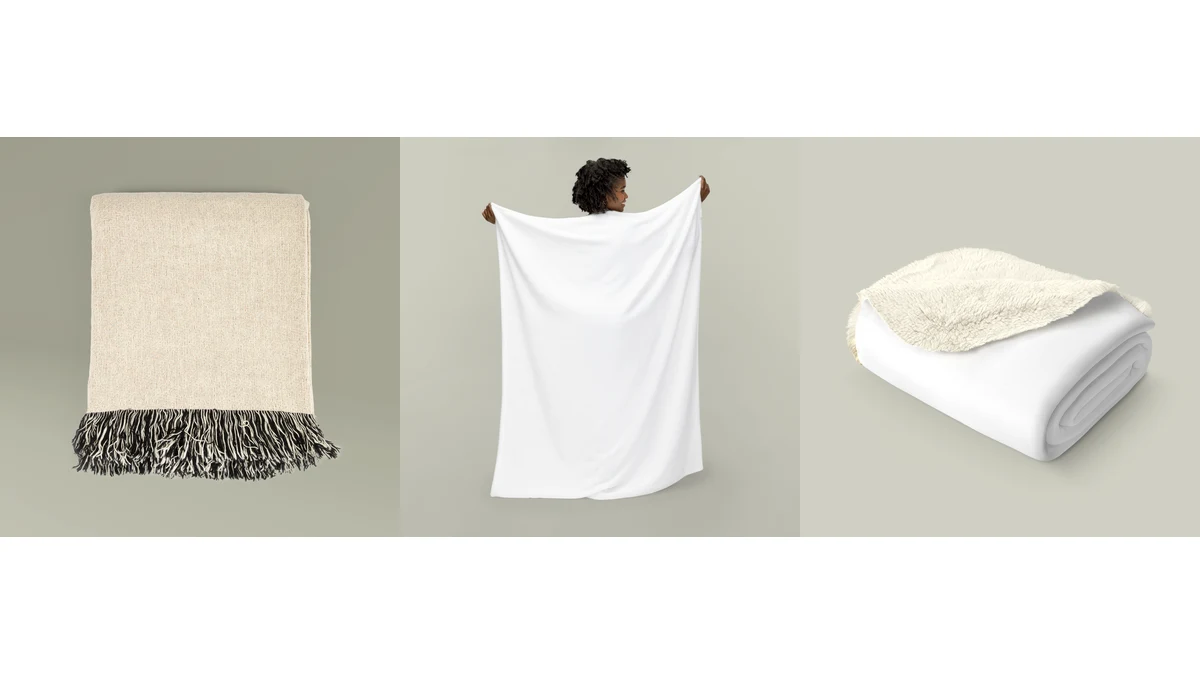
A blanket comparison is more useful when it begins with texture and image treatment rather than a single claim of softness. Woven yarn, short plush pile and a sherpa-style reverse offer different surfaces to review. The best starting point is the experience the project needs to create.
This guide compares three catalog models. It does not rank every blanket material or promise that a digital picture reproduces the final feel.
Woven: evaluate the artwork as part of the textile
The woven blanket lists 100% cotton yarn and fringed edges. Its Artwork and Photo treatments are intended for different image types: distinct color blocks for the former and photographic gradients for the latter.
Do not read that distinction as a guarantee that every fine detail will reproduce exactly. The product page explicitly notes that digital mockups cannot fully reproduce the final woven result. Review a physical sample when the image itself is central to the purchase decision.
Ask how a small line, facial detail or pale transition will be represented. If the design depends on a very precise edge, consider whether simplifying that element would communicate the idea more clearly. Make the change before approval and keep the approved version with the selected treatment.
Velveteen plush: check the route-specific composition
The velveteen plush blanket lists a polyester-based composition that varies by route: either 100% polyester or an 83% polyester/17% spandex blend. It has one-sided decoration and double-stitched edges.
The page also notes that production variation may leave it up to three inches shorter than the listed size. If the blanket must cover a specific area, make that requirement explicit and ask about expected dimensions before committing to a layout or package.
Do not use a product title as a substitute for a composition statement. Retain the confirmed blend and care guidance in the final product record so a later route change does not silently change the description.
Sherpa fleece: consider both faces
The sherpa fleece blanket lists a polyester construction, one-sided artwork and a plush sherpa-style reverse. It notes that texture varies by production route. That makes the reverse surface a useful sample-review item, rather than a detail to infer from a front-facing image.
Check the edge finish, the feel of both sides and the way the blanket folds for its intended use. This is a practical review, not a thermal-performance test. The catalog does not establish a quantified warmth ranking between these three models.
Match the format to the use case
A decorative throw, a large visual statement and a compact gift have different layout requirements. Review the artwork at the selected dimensions. Keep essential details inside the confirmed printable area and consider where folds will fall when the blanket is displayed.
Ask which dimensions are confirmed for the chosen route. A size preference or an aggregate option count does not establish that every listed combination is available. For woven work, also confirm fringe expectations; for plush work, keep the dimensional variation in view.
Finish with a sample and information check
Read the exact care instructions instead of transferring them from another blanket. Confirm the composition, dimensions, treatment, destination and packaging before the quote is approved. If the recipient will need care information, plan how it accompanies the item.
Choosing among these blankets is a decision about the actual material and artwork together. A well-chosen sample tells you more than an unsupported claim that one finish is universally best.